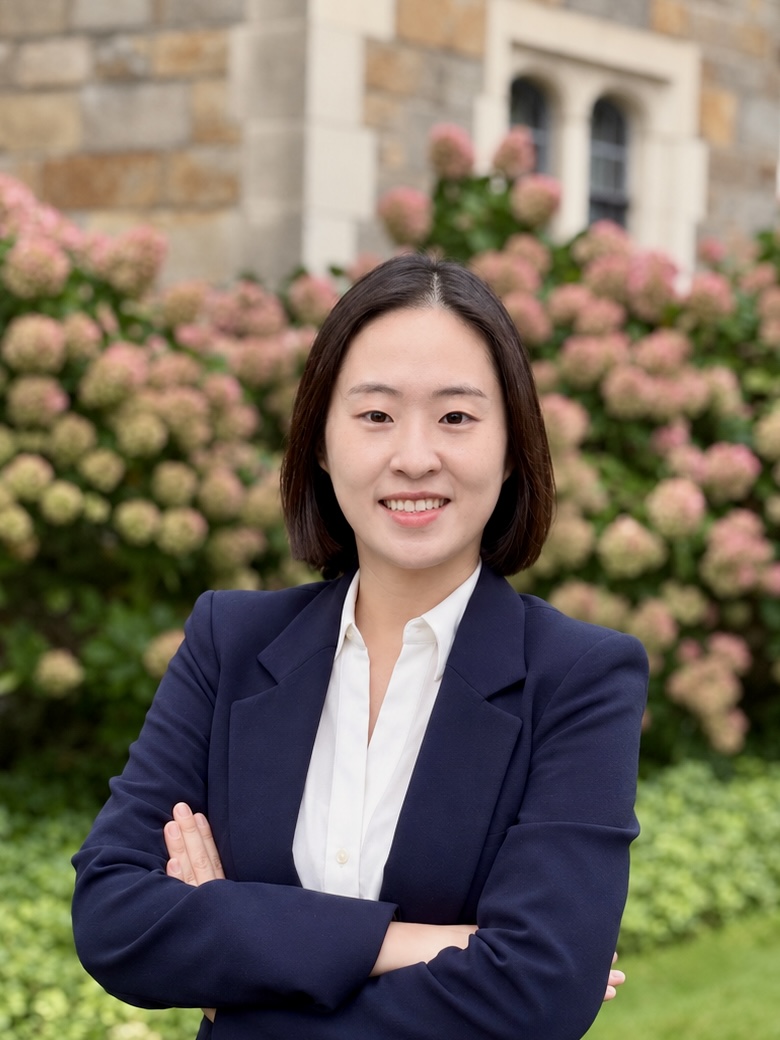
I am a PhD Candidate in Economics at the University of Michigan. I am on the 2026-2027 job market.
My research interests are at the intersection of public and labor economics. I am particularly interested in the topics of taxation, human capital, inequality, labor market discrimination, and political economy.
Contact: joycekim@umich.edu / CV: Download Here
Job Market Paper
Should Education Be Taxed or Subsidized? Optimal Policies with Signaling and Information [Draft Coming Soon!]
Publications
The Value of In-Person Schooling During Times of Educational Disruption: Impacts on Students’ Emotional Problems and Subjective Well-Being
(joint with Youjin Hahn, Hyuncheol Bryant Kim, and Hee-Seung Yang)
Economics of Education Review, 2026
Abstract (click to expand)
This study examines the effects of large-scale school closures on the emotional problems and subjective well-being among primary school students in South Korea. Using administrative records on in-person school days and panel survey data from 2018 to 2022, we find that more in-person schooling during the pandemic reduces students’ emotional problems – such as aggression, social withdrawal, and psychosomatic symptoms – and improves self-reported health. These gains are smaller for students with lower socioeconomic status, highlighting inequalities in the emotional benefits of school reopening. Importantly, the benefits persist: students with greater in-person exposure in 2020 continued to report better emotional health and higher subjective well-being for at least two subsequent years. We also find that stronger interpersonal relationships and healthier time use are associated with these sustained improvements.
Civil Liberties in Times of Crisis
(joint with Marcella Alsan, Luca Braghieri, Sarah Eichmeyer, Stefanie Stantcheva, and David Y. Yang)
American Economic Journal: Applied Economics, 2023
Abstract (click to expand)
We study people’s willingness to trade off civil liberties for increased health security in the context of the COVID-19 pandemic by deploying representative surveys involving around 550,000 responses across 15 countries. We document significant heterogeneity across groups in willingness to sacrifice rights: citizens disadvantaged by income, education, or race are less willing to sacrifice rights than their more advantaged peers in every country. Leveraging naturally occurring variation and experimental approaches, we estimate a one standard deviation increase in health insecurity increases willingness to sacrifice civil liberties by 68–83 percent of the difference between the average Chinese and US citizen.
The Health of Democracies During the Pandemic: Results from a Randomized Survey Experiment
(joint with Marcella Alsan, Luca Braghieri, Sarah Eichmeyer, Stefanie Stantcheva, and David Y. Yang)
American Economic Review Papers and Proceedings, 2023.
Abstract (click to expand)
Concerns have been raised about the “demise of democracy,” possibly accelerated by pandemic-related restrictions. Using a survey experiment involving 8,206 respondents from 5 Western democracies, we find that subjects randomly exposed to information regarding civil liberties infringements undertaken by China and South Korea to contain COVID-19 became less willing to sacrifice rights and more worried about their long-term erosion. However, our treatment did not increase support for democratic procedures more generally despite our prior evidence that pandemic-related health risks diminished such support. These results suggest that the start of the COVID-19 crisis was a particularly vulnerable time for democracies.
Working Papers
Pandemics and the Polarization of Reality: Evidence from Europe and the United States
(joint with Marcella Alsan, Stefanie Stantcheva, and David Y. Yang)
Conditionally Accepted: The Journal of Politics.
Abstract (click to expand)
During the COVID-19 pandemic, citizens of democratic nations faced a trade-off between civil liberties and public welfare as governments implemented measures to protect public health. Using surveys conducted at multiple intervals across five Western democracies, we examine how citizens’ views on this trade-off evolved. We find that early in the pandemic, there was little partisan divide in any country, and objective COVID-19 risk was the leading predictor of willingness to sacrifice civil liberties. In later years, however, political affiliation became the primary factor explaining views toward this trade-off in the U.S. only. In Europe, views continued to be influenced mainly by disease prevalence. We also find the partisan gap among views in the U.S. is narrowed once conditioning on subjective beliefs about disease risk—suggesting that different interpretations of the same facts about the disease contributed to the divide.
Work in Progress
Consequences of Exempting Young People from Income Tax: Earnings, Employment, and Education [Draft Coming Soon!]
(joint with Artur Król and Michal Myck)
Beyond the Résumé: Blind Hiring in a Multi-Stage Hiring Process [Draft Coming Soon!]
(joint with Hee Sung Kim and Seung Yong Sung)
Occupation-Specific Tax Exemption and Educational Choices